
Two Sides of the Same Coin
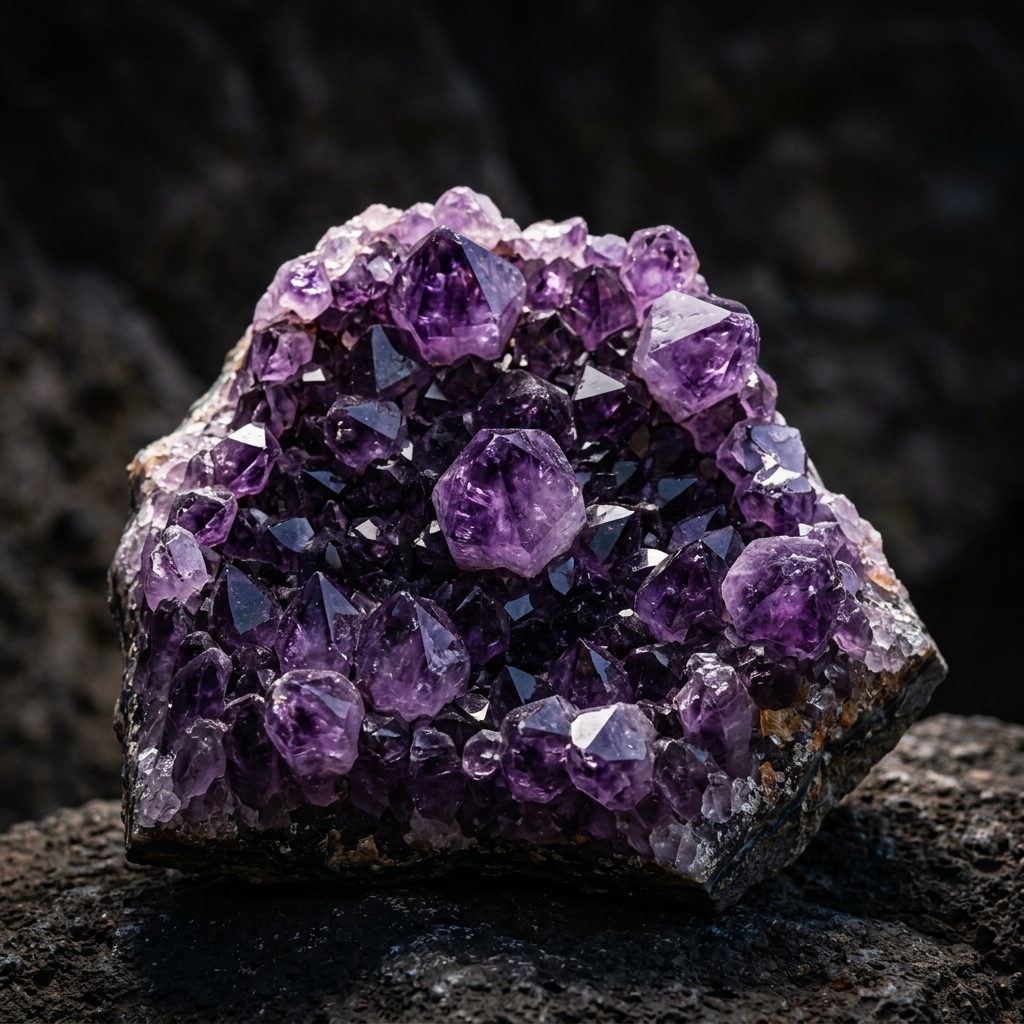
If you walk into any crystal shop or jewelry store in the world, you will undoubtedly be greeted by the deep, royal purple of Amethyst and the bright, honey-golden glow of Citrine.
To the naked eye, they look like entirely different species of gemstone. But under a microscope and a chemical spectrometer, they are virtually indistinguishable. Both stones are varieties of macrocrystalline quartz (silicon dioxide). They possess the exact same crystal structure, the exact same Mohs hardness of 7, and the exact same refractive index.
The only difference between the purple crown jewel of the quartz family and its golden sister lies in a microscopic dash of iron and a severe geological "baking" process.
1. The Purple Rule: How Amethyst Forms
Quartz is the most abundant mineral on Earth's surface. In its purest form, it is completely colorless (Clear Quartz). However, as quartz crystals grow inside hydrothermal veins or inside the gas bubbles of volcanic geodes, they often trap trace impurities from the surrounding groundwater.
To create Amethyst, two highly specific events must occur:
- Iron Impurities: The growing quartz lattice must trap trace amounts of iron (specifically, Ferric Iron, Fe³⁺).
- Geological Radiation: The host rock surrounding the geode must contain trace amounts of radioactive elements (like uranium or potassium-40). Over millions of years, the low-level, natural gamma radiation from the host rock bombards the quartz crystal.
This radiation knocks an electron out of the iron atoms, altering how they absorb light. The result is the breathtaking, deep purple color that has made Amethyst a symbol of royalty since the days of ancient Egypt. The most massive, spectacular amethyst geodes in the world are currently mined from ancient basalt flows in Brazil and Uruguay.
2. The Heat Transformation: The Birth of Citrine
If Amethyst is born of radiation, Citrine is born of fire.
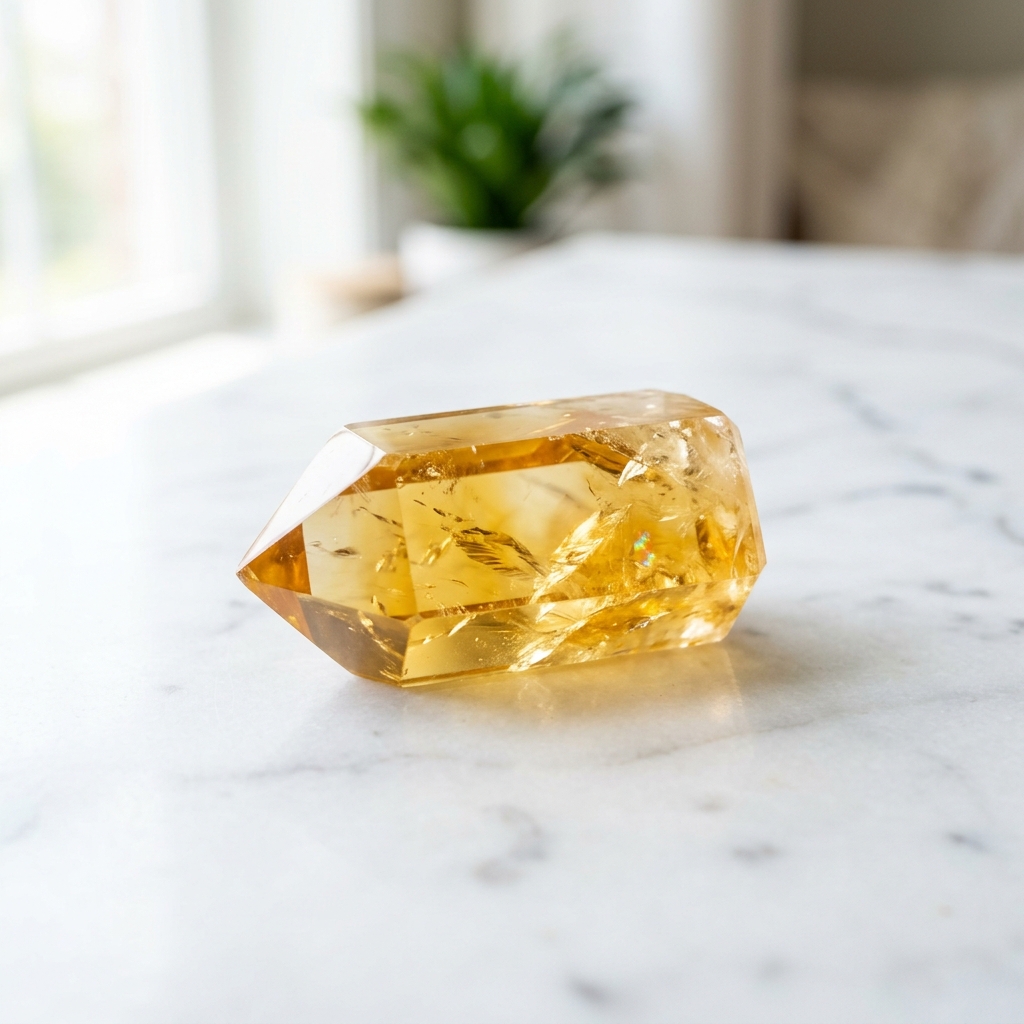
Natural citrine is exceedingly rare. It forms when a quartz crystal containing iron impurities is subjected to significant geothermal heat (often from a nearby magma intrusion) over long periods. This heat acts as a reset switch. It breaks the color centers created by the radiation, and fundamentally changes the oxidation state of the iron trapped in the crystal. The purple vanishes entirely, replaced by a pale, clear, lemon-yellow color.
The Lapidary "Baking" Secret
Because natural citrine is so rare, and consumer demand for yellow gemstones is so high, the gem industry stepped in to replicate nature's process.
Today, over 95% of the "citrine" sold on the commercial market is actually low-grade amethyst that has been artificially baked in a laboratory oven. When amethyst is slowly heated to approximately 400°C to 500°C (750°F to 930°F), it undergoes the exact same chemical transformation that occurs in nature.
The resulting heat-treated stones are permanently altered. They are technically real quartz, but their color is often a much darker, reddish-orange or "burnt amber" compared to the pale lemon of natural citrine. You can easily spot a baked amethyst cluster by looking at its base; the white quartz matrix is often crumbly and opaque, a hallmark of the severe heat treatment.
3. The Best of Both Worlds: Ametrine
In one specific geological freak occurrence, nature decided not to choose between purple and gold.
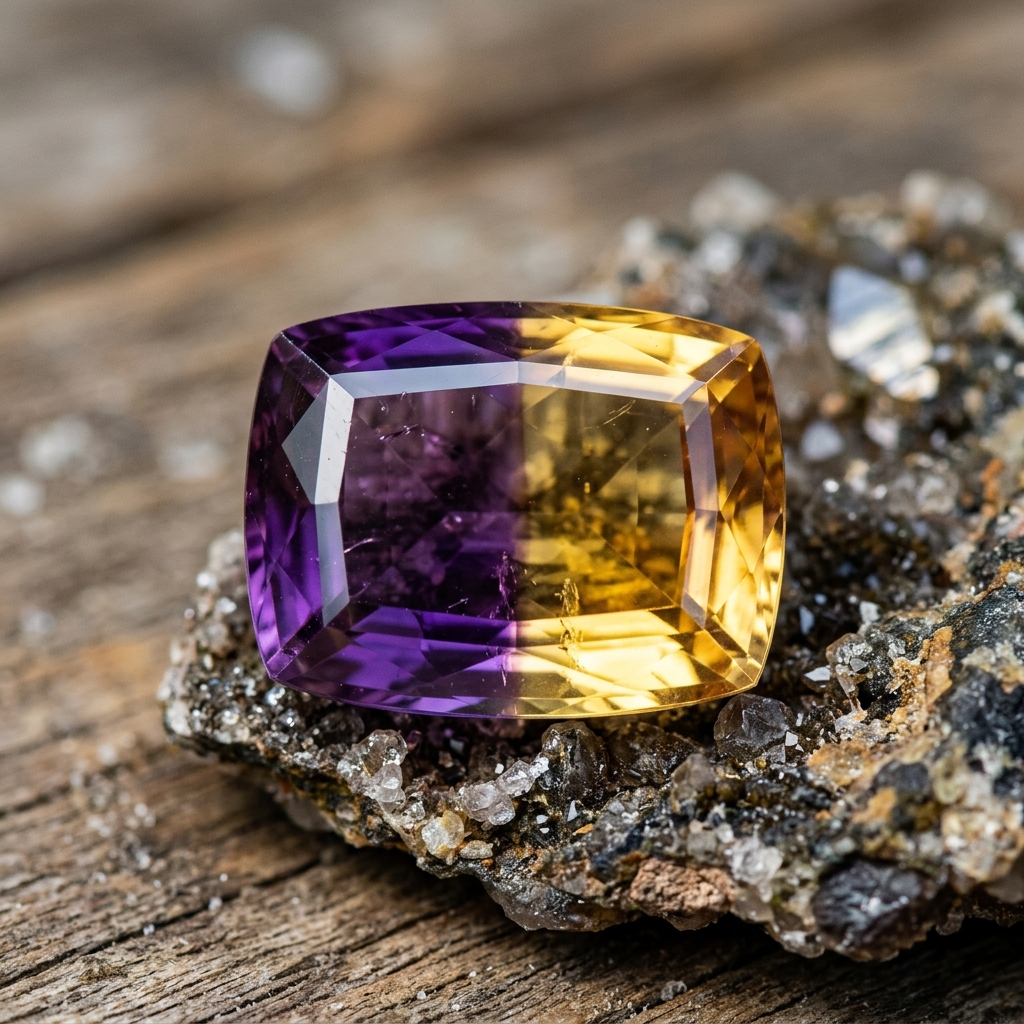
Ametrine is a single quartz crystal that displays distinct zones of both purple amethyst and yellow citrine. This bicolored phenomenon is caused by a temperature gradient during the crystal's formation. One side of the crystal was slightly warmer than the other, or was exposed to slightly different radiation levels, causing the iron oxidation state to split perfectly down the middle of the crystal lattice.
True Ametrine is almost exclusively found in a single location on Earth: the remote Anahí Mine in Bolivia. Legend has it that the mine was discovered by a Spanish conquistador in the 1600s, given as a dowry when he married an Ayoreo princess named Anahí, and then lost to the jungle for over three centuries before being rediscovered in the 1970s.
When faceting Ametrine, master lapidary artists must carefully orient the rough stone so the finished gem displays a perfect 50/50 split of purple and gold across the table, creating a gemstone that beautifully illustrates the delicate, heated boundary between two sister stones.
Varieties of Macro-Crystalline Quartz
For more scientific details and research on this topic, you can check out the Geology.com.